

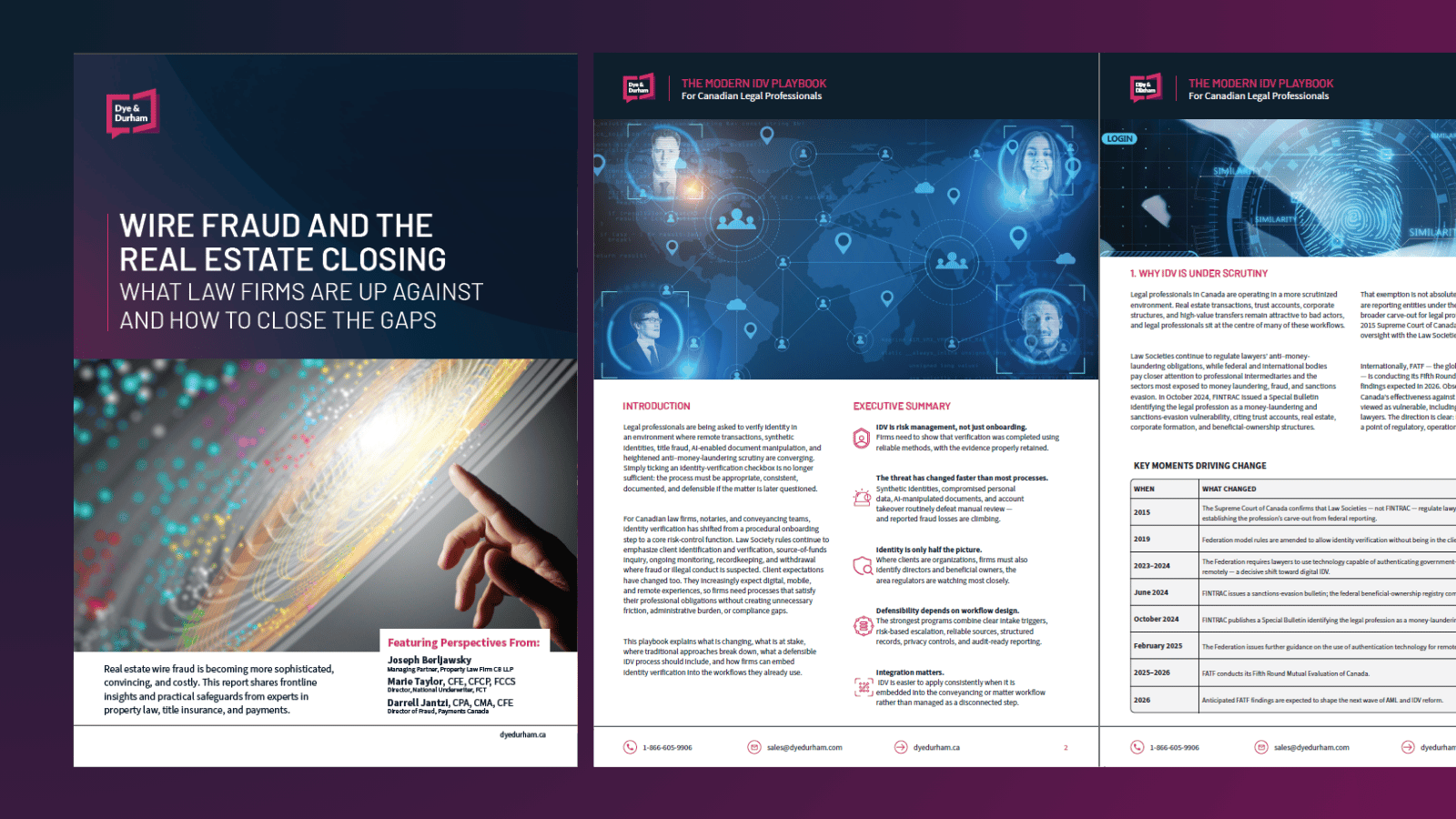
Wire Fraud and the Real Estate Closing
What law firms are up against and how to close the gaps
Real estate wire fraud is becoming more sophisticated, convincing and costly.
Drawing on frontline perspectives from experts in property law, title insurance and payments, this report explores how fraud is evolving, where risk appears throughout a real estate transaction, and the practical safeguards firms can put in place to better protect themselves and their clients.
“Fraud succeeds when trust moves faster than verification.”
WIRE FRAUD AND THE REAL ESTATE CLOSING
What's Inside
Understand the Threat
Explore why law firms and trust accounts are attractive targets and how AI is making fraudulent communications increasingly sophisticated and difficult to identify.
Recognize Where Risk Appears
Learn how business email compromise, vendor and lender impersonation and identity verification bypass can surface throughout a real estate transaction — particularly when payment instructions change.
Build Stronger Safeguards
Get a practical prevention playbook covering dual authorization, independent verification, multi-attribute identity checks, staff training and vendor and lender validation.
Key Takeaways
Understand the fraud patterns increasingly targeting real estate transactions
Identify the highest-risk moments throughout the transaction lifecycle
Learn why changes to payment instructions demand independent verification
Strengthen controls with dual authorization and documented verification
Build more resilient identity verification and staff training practices
Know what to do — and how quickly to act — if funds are misdirected
Strengthen Your Firm's Defences Against Wire Fraud
Fraudsters are becoming more sophisticated, but stronger processes can make fraudulent transactions significantly harder to complete.
Learn where vulnerabilities can emerge, which verification practices matter most and what your firm can do to reduce risk throughout the real estate closing process.